




How Can You Initiate ‘Emotional Intelligence’ Parenting at Home with the Help of Parenting Books?
1. A Parent’s Guide to Raise Emotionally Smart Children at Home
2. Books Can Make Parenting with Emotional Intelligence Natural
3. How Parenting Books Can Transform Your Home Life Effortlessly
Kids today are smart. They can troubleshoot Wi-Fi, champion online quizzes, and swipe through screens like pros. But emotional intelligence? That is a different kind of smart. One that is built through connection, not clicks.
For real, an emotionally intelligent kid will always notice how others feel, name their own feelings, listen without interrupting, bounce back from setbacks, and choose kindness. In short, high Emotional Quotient (EQ) is not an inborn skill, and neither do kids come with manuals.
But what can come close are the parenting books. Especially the ones that teach us how to raise emotionally aware humans. This blog explores how you can benefit from such manuscripts and win at mindful upbringing.
Making Kids Emotionally Intelligent Through Parenting Books
Parenting in the AI era can be a pipe dream for many fathers and mothers. After all, handling kids is no piece of cake in 2025. They are so evolved that they do a bunch of things we and you could never even imagine. For instance:
- They question authority.
- They absorb information instantly.
- They mirror adult emotions with uncanny precision.
This proves that the traditional parenting hacks will not work for them. So, then what will? Relax, you don’t have to figure it out alone. Parenting books rooted in emotional intelligence can help you raise not just well-behaved kids, but emotionally wise ones.
Emotional Intelligence for Guardians vs. Children
Society defines a good parent as someone attentive to their child’s emotions. It is also identified by experts that the guardians must go beyond authoritative parenting so that the child can think of them as a friend. Be comfortable with them. Hence, when a parent is unable to hear or respond to a child’s feelings, they are most likely to find solace in screens.
All you need is a smart parenting book like The Tech-Wise Family by Andy Crouch. Coining this name because it is one of the very few helpful manuscripts that openly talks about tapping into the latest technology for bringing up smart kids. But before we dig into what he has to share through his book, let us compare what EQ means for both parties.
| For Guardians |
| They can name their emotions and wait before acting irrationally. |
| They can stay calm under stress to give kids emotional safety. |
| By understanding others’ feelings, they can encourage empathy. |
| The problems can be solved with patience to model healthy conflict resolution. |
| Clear communication is perfect for teaching children how to express themselves. |
| For Children |
| They should be able to name their emotions. It helps them understand themselves. |
| One should know how to manage big feelings like anger for better self-control. |
| By being aware of others’ emotions, kids learn to be empathetic. |
| When they handle conflict calmly, it helps them compromise. |
| They should know how to express sentiments. It will build their confidence. |
Here’s What a Parent Should Do Now
The only difference that remains between the two is that guardians are models, while children openly absorb every little detail. So, for emotional intelligence parenting, let us hear what Andy Crouch’s book has to say.
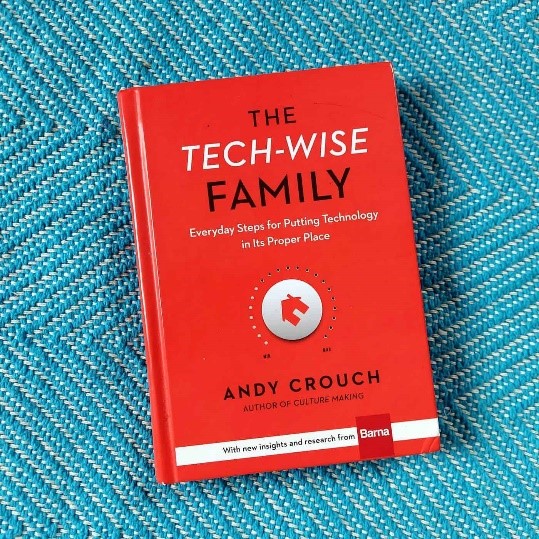
The Tech-Wise Family manuscriptis divided into three sections. He explains how it is important for custodians and guardians to set a positive model for kids to follow. Such as they can begin by putting their phones down to hear them.
Otherwise, they will never agree to the screen time rules. This means that both the parents’ physical and mental presence are necessary at home.
No more handing over a screen to a tantrum-throwing child. Crouch also mentions that the less a model relies on screens to entertain the children, the more the kids will know how to productively entertain themselves.
For instance, through relationships, conversations, reading, and any form of art. These are better than the mindless activity to kill time and helpful to raise future-ready kids.
Simple Daily Habits for Smart Parenting
- Start by recognizing emotions as they happen. Both yours and your child’s.
- Make sure that you listen to them without interrupting.
- It is important to ask them, after stories or shows, “How do you think they felt?”
- You should always say thank you and apologize to show them it is no big deal.
- Let your child comfort others when they want to; otherwise, do not push them.
- You have to reflect on your own feelings out loud, such as acknowledging a mistake.
- Encouraging sharing and kindness is also quite important in smart parenting.
- You must make the kids read books that explore emotions and relationships.
- Storytelling sessions are great as they work like mind-openers.
- In the end, make sure that you celebrate their thoughtful choices, not just their successes.
Tips on How to Stay Calm While Dealing with the Chaos
To initiate ‘Emotional Intelligence’ parenting at home, it is primarily important to read relevant books. Such as the one mentioned above, written by Andy Crouch. But there is one more valuable step that you must follow before you even begin the updated parenting approach.

We call it self-care. Yes, it is equally crucial because only a mentally healthy individual can raise able children. But we know how it is with kids. They test your patience to another level. Hence, we advise you to practice staying calm. It is the only key to surviving the chaos.
Moreover, when emotions run high, you must always pause before reacting. A simple deep breath or a short step away can reset your tone. Apart from this, speak softly at all times. Your calm voice is enough to make them obey. Finally, keep expectations realistic as kids are still learning, and remember that calm parenting starts with a regulated adult.
FAQs
1. Can high EQ help reduce tantrums?
Yes, because when kids learn to name emotions and feel understood, they are less likely to explode. Also, emotional intelligence builds self-regulation, making sure that they express frustration calmly instead of through tantrums.
2. Is it more important than academic success?
The high EQ supports long-term success. It helps kids handle stress, build relationships, and make thoughtful choices. Hence, while academics matter, EQ is no less important.
3. At what age should I start teaching it to my child?
Honestly, you should start early. This is when the brain is quite active, and it is easier to teach toddlers empathy through play. The earlier you introduce it, the easier it becomes part of their natural behavior with age.
The Summary
Speaking of how to make your children emotionally intelligent, there is only one solution: become the best role model for them. Yes, it is nothing but true that children absorb 90% more than an average human.
Hence, if you want to raise even one kid in 2025, an era fully loaded with tech gadgets, you must do it wisely. It is you who can teach your kids to set rules and follow them. If you won’t do it, neither will the children. So, as Andy would say, ‘Put Your Phones Down’.