




How To Navigate The Present And Prepare Your Children For An AI-Powered Future
Let’s be honest, we are living in a strange in-between moment, where the world we grew up in still exists, but the world our children are growing into is being quietly rewritten by algorithms. AI is no longer a distant concept or a sci-fi plot twist. It is already shaping how we work, learn, communicate, and even make decisions. As parents, the question isn’t if AI will influence our children’s lives, but how deeply.
The real challenge is that they will figure that out faster than we ever could. This is about raising children who can think critically, adapt confidently, and still trust their own judgment when machines offer answers in milliseconds.
So how do we prepare them for a future that is still being built without losing our footing in the present?
The answer isn’t more screens or stricter rules. It starts at home, in everyday conversations, quiet observations, and the values we model long before our children ever ask, what can AI do?
Understanding technology beyond the screen
Children don’t just use technology. They grow up inside. From smart assistants answering questions to recommendation algorithms shaping what they watch, technology subtly teaches them how the world works. Instead of framing devices as rewards or distractions, help children see them as tools with purpose. Talk about how apps function, why certain videos keep appearing, and who benefits from their attention. When kids understand that technology is designed, they become more mindful users rather than passive consumers.
Introducing AI as a tool, not an authority
AI can feel intimidating, even to adults. For children, it can easily blur into something that sounds all-knowing. This is where parents play a crucial role. Explain AI in simple, honest terms.
- It learns from data
- It makes predictions
- It can be wrong
Encourage children to question AI-generated answers, compare sources, and trust human judgment over automated suggestions. When kids learn that AI assists rather than decides, they grow into thinkers who collaborate with technology instead of surrendering to it.
Navigating online spaces with awareness and empathy
The internet is a social world, not just an information hub. Children are forming identities, friendships, and self-worth online, often earlier than we realise. Open conversations about online behaviour, digital footprints, and emotional well-being matter more than strict surveillance. Teach them that likes aren’t validations, silence isn’t rejection, and not everything online reflects reality. When children feel safe discussing what they see and experience online, they are far more likely to navigate digital spaces with confidence and care.
Building digital wisdom at home
Mindful digital navigation doesn’t require tech expertise; it requires presence. Family discussions, shared media experiences, and curiosity-driven conversations help children connect values with behaviour. When parents model balance, question what they consume, and admit when they don’t have all the answers, children learn that wisdom in the digital age isn’t about control. It is about awareness, intention, and the courage to think for oneself in a world designed to do the thinking for you.
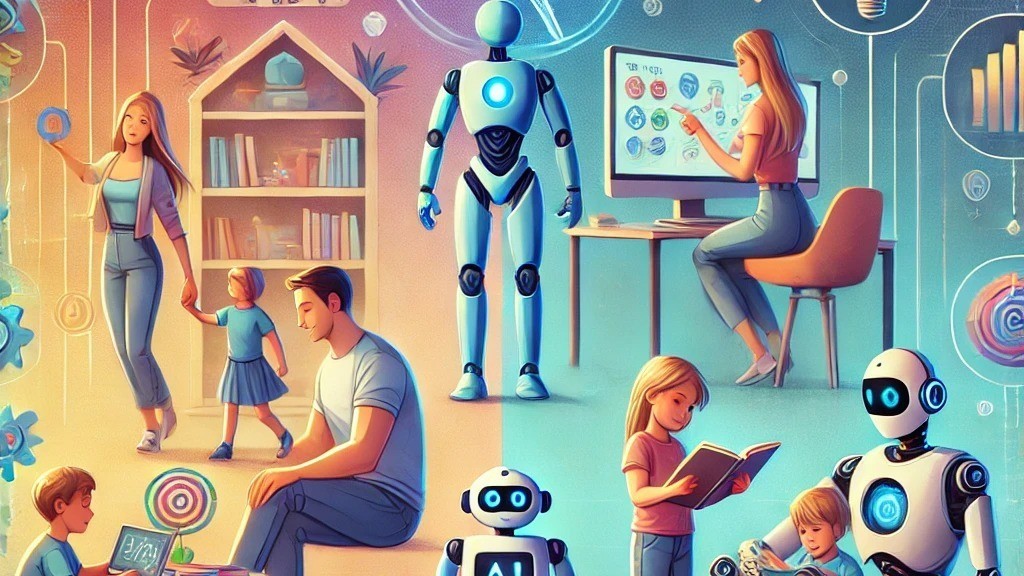
Teaching children how to think, not what to think
In an age where answers are instant, the real skill is knowing what to question. Encourage children to ask why and how.
- Why something works
- How a conclusion was reached
- What might be missing from the story
Simple habits like discussing new headlines, debating different viewpoints at the dinner table, or asking children to explain their reasoning help sharpen their thinking muscles. AI can generate answers, but it cannot teach discrimination. That ability is built through conversation, curiosity, and gentle challenge at home.
Nurturing what machines can’t imitate
Creativity is how children solve problems, express ideas, and imagine new possibilities. Make space for unstructured play, storytelling, drawing, building, and even boredom. These moments spark original thought in ways screens rarely do. Encourage children to create with technology, not just consume through it. Writing stories, designing simple projects, or experimenting with ideas. While AI can remix existing patterns, human creativity is rooted in emotion, experience, and imagination. The qualities that no algorithm truly owns.
Preparing for change, not certainty
The future will reward those who can pivot, learn, and unlearn. At home, adaptability grows when children are allowed to try, fail, and try again. Normalize change by talking openly about learning new skills, shifting plans, or adjusting goals. Celebrate effort over perfection. When children see challenges as opportunities rather than threats, they develop resilience. An essential skill in a world where jobs, tools, and technologies will evolve faster than ever.
Raising humans, not just high performance
Perhaps the most irreplaceable skill of all is moral judgment. AI can optimise outcomes, but it cannot weigh compassion, fairness, or responsibility. Invite children into conversations about right and wrong, consequences, and impact both online and offline. Discuss real-life scenarios like privacy, honesty, empathy, and accountability in digital spaces. When children learn to pause and ask, “Should I?” instead of just “Can I?”, they develop a moral compass that technology will never replicate.
The home as a training ground for the future
Future-ready skills aren’t taught through apps or curricula alone. They live daily. Every conversation, mistake, and moment of reflection helps shape children who can think deeply, create boldly, adapt confidently, and act ethically. In a world increasingly powered by machines, these human skills won’t just matter. They will matter most.
Demystify AI early and honestly
Children don’t need technical depth. They need clarity. Explain AI as a system created by humans, trained on data, and limited by what it is given. Let them know it can make mistakes, reflect bias, and doesn’t understand the way people do. When AI feels understandable rather than mysterious, children are more likely to engage with it thoughtfully instead of treating it as an unquestionable authority.
Teach them to ask better questions
AI responds to prompts, but wisdom lies in framing the right ones. Encourage children to refine their questions, explore follow-ups, and compare AI responses with books, teachers, or real-life experience. This habit builds agency. They learn that they are directing the tool, not being led by it. Collaboration starts when children see AI as a partner that supports thinking, not replaces it.
Emphasises human oversight and responsibility
Responsibility always stays with the human. Whether it is homework, creative projects, or decision-making, children should understand that AI assists, but they own the outcome. Encourage them to review, edit, and question AI-generated work. This reinforces accountability and helps them develop judgment, a skill no system can automate.
Balance efficiency with integrity
AI makes tasks faster, but faster isn’t always better. Talk openly about shortcuts, originality, and honesty. Help children distinguish between using AI to learn and using it to avoid learning. When they understand the value of effort and authenticity, they are more likely to use AI ethically rather than dependently.
Raising humans in a machine-powered world
Preparing children for an AI-powered future isn’t about predicting a technological shift. It is about grounding them in what never changes. Curiosity, judgment, empathy, and integrity will always matter, no matter how advanced the tools become. When children are taught to think critically, create freely, adapt courageously, and act ethically, they carry skills that technology can support but never replace.
The home remains the most powerful training ground. Through everyday conversations, mindful boundaries, and honest engagement with technology, parents can help children form a healthy relationship with AI, one based on collaboration, not dependence.
The goal is not to raise perfect users of technology, but thoughtful humans who know when to use it, when to question it, and when to step away.
In the end, the future won’t belong to those who know the most about AI. Instead, it will belong to those who know themselves. And that is a lesson no machine can teach.